
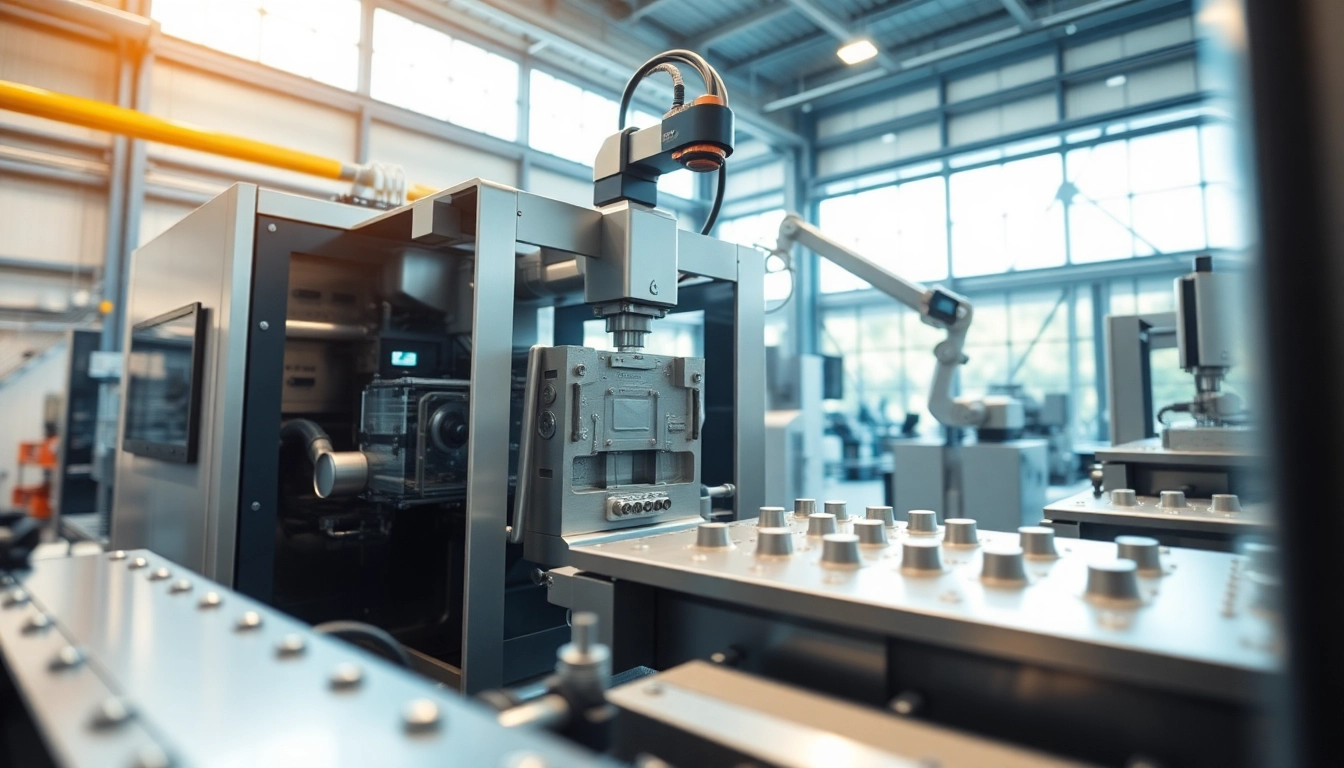
Introduction to Injection Molding Machines
Injection molding machines are a cornerstone of modern manufacturing, playing a critical role in producing a wide array of plastic products efficiently and cost-effectively. This technology facilitates the creation of complex components with high precision, offering manufacturers the ability to scale production while maintaining stringent quality standards. In today’s competitive market, understanding the various types of injection molding machines, their features, and benefits is essential for businesses seeking to enhance their manufacturing capabilities. When exploring options, Injection Molding Machine offerings provide comprehensive insights into advanced technology solutions.
Definition and Overview of Injection Molding Technology
Injection molding is a manufacturing process used to produce parts by injecting molten material into a mold. The process includes heating plastic pellets until they become liquid, injecting this material into a mold under high pressure, and allowing it to cool and solidify into the final product. This method is highly versatile and capable of producing complex geometries, making it ideal for industries ranging from automotive to consumer goods.
Types of Injection Molding Machines: Electric, Hybrid, and Hydraulic
There are three primary categories of injection molding machines: electric, hybrid, and hydraulic. Each type has unique features that cater to different manufacturing needs:
- Electric Injection Molding Machines: These machines utilize electric motors to drive the injection process, resulting in higher energy efficiency, precise control, and quieter operation.
- Hybrid Injection Molding Machines: Combines the benefits of electric and hydraulic machines, offering energy savings while handling larger mold sizes and providing robust force.
- Hydraulic Injection Molding Machines: Traditional machines that use hydraulic systems for injection. They are renowned for their high clamping force and are often used for medium to high volume production runs.
Key Benefits of Modern Injection Molding Machines
Modern injection molding machines offer several advantages that enhance productivity and efficiency:
- Cost Efficiency: Automatic cycle times reduce labor costs and increase throughput.
- Precision and Repeatability: Enhanced control mechanisms allow consistent production quality across batches.
- Material Versatility: A wide range of thermoplastics and thermosetting polymers can be processed, allowing for diverse applications.
- Reduced Waste: Efficient scrap reduction minimizes material waste and maximizes yield.
Topstar TEII Series: All Electric Injection Molding Machine
Innovative Design Features of TEII Series Machines
The Topstar TEII series represents a leap forward in electric injection molding technology, offering a host of innovations that enhance operational efficiency. Key features include:
- High-Rigidity Clamping Unit: Stabilizes the product and protects the mold during operation.
- Modular Design: Allows for adaptability to various working conditions, enhancing machine versatility.
- Humanized Interactive Interface: Simplifies the operation through intuitive controls and feedback systems.
Performance and Efficiency in Industrial Manufacturing
With clamping forces ranging from 90T to 460T, the TEII series machines are designed for performance. They excel in applications requiring precision and speed, capable of producing complex parts with high consistency. The use of optional linear rail support reduces friction and enhances movement efficiency, ultimately leading to faster cycle times.
Applications and Use Cases for TEII Series
Industries benefiting from the TEII series include:
- Consumer Goods: Ideal for producing complex and intricate designs.
- Automotive: Used for manufacturing high-precision components.
- Medical Devices: Suitable for producing parts that require strict adherence to regulatory standards.
Topstar TMII Series: Servo-Driven Injection Molding Machines
Integration with Automated Systems and Robotics
The Topstar TMII series incorporates servo technology that enhances the injection molding process’s integration with automated systems. By allowing for seamless communication between the machine and robotic systems, manufacturers can achieve higher levels of automation, significantly improving production efficiency.
Real-Time Process Control and Feedback Mechanisms
Real-time feedback is a standout feature of the TMII series, enabling operators to monitor the entire injection molding process closely. This capacity for adjustment and optimization means that manufacturers can respond swiftly to any changes or discrepancies in production, thereby maintaining quality standards.
Advantages of Servo Technology in Injection Molding
Servo-driven machines bring several advantages:
- Energy Savings: These machines consume less energy compared to traditional hydraulic systems.
- Precise Control: Enhanced accuracy in movement enables the production of more intricate designs.
- Reduced Cycle Times: Faster operation speeds lead to increased overall productivity.
Topstar TH Series: Direct Press Type Injection Molding Machines
Specifications and Capabilities of TH Series Machines
The TH Series Direct Press Type Injection Molding Machines are highly versatile, ranging from 130T to 2800T clamping forces. They feature standardized clamping and injection platforms, making them suitable for various applications.
Meeting Large Format Production Requirements
One of the critical features of the TH series is its two-plate direct pressure center clamping structure that allows for an extended mold opening stroke. This design is particularly beneficial for producing large-format and deep-cavity products.
Efficiency in Handling Deep-Cavity Molds
With a design that caters specifically to deep-cavity molds, the TH series ensures stable and efficient production, capable of meeting the demands of industries such as automotive and large-scale consumer products.
Future Trends in Injection Molding Technology (2025 and beyond)
Emergence of Smart Manufacturing and IoT Integration
As manufacturing moves toward Industry 4.0, the integration of the Internet of Things (IoT) into injection molding technology is becoming increasingly prevalent. Smart machines that communicate with each other can optimize production schedules and reduce downtime through predictive maintenance.
Environmental Sustainability in Injection Molding Practices
With increasing pressure on manufacturers to adhere to sustainable practices, the injection molding industry is focusing on reducing its carbon footprint. Innovations in machine efficiency, as well as the advancement of biodegradable and recycled materials, will play a crucial role in future developments.
Innovations and Developments to Watch in Injection Molding
Future advancements in injection molding technology will likely include:
- Enhanced Energy Efficiency: Continued development of machines that consume less energy will be critical.
- Advanced Materials: Research into new materials with improved performance properties will expand application possibilities.
- Automation: More sophisticated automation will streamline production processes and reduce labor costs.